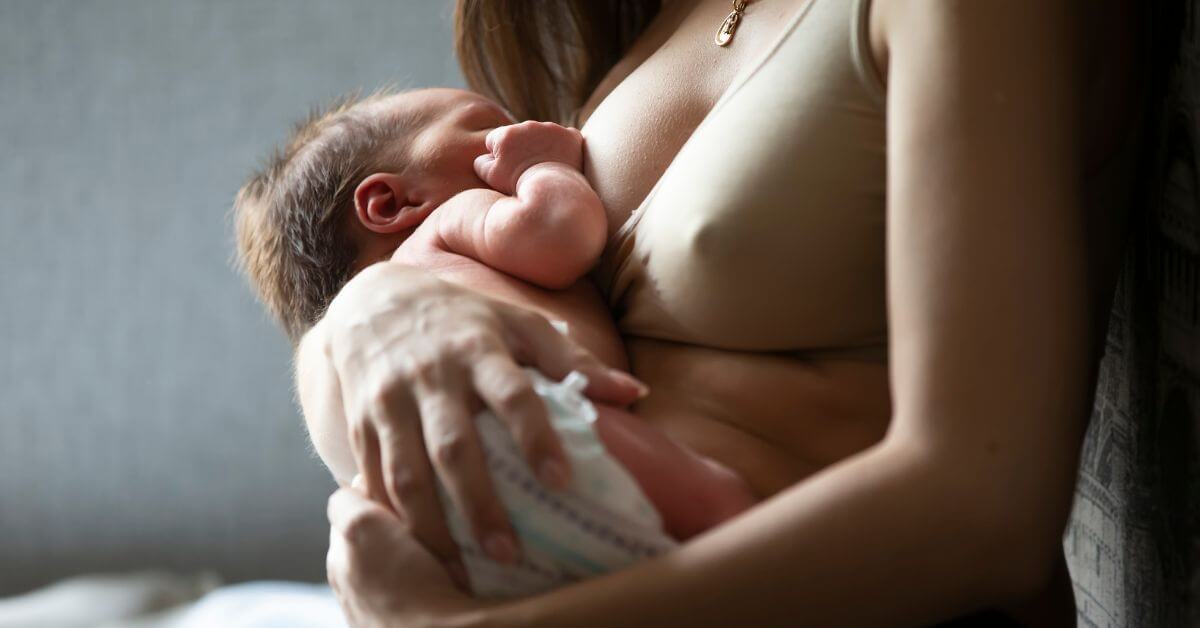
Have you ever heard of paid breastfeeding breaks? Nope, us neither.
What we have heard, and said ourselves, is something different.
Mums starting to wean a month before they go back to work.
Mums expressing in a toilet cubicle on their lunch break.
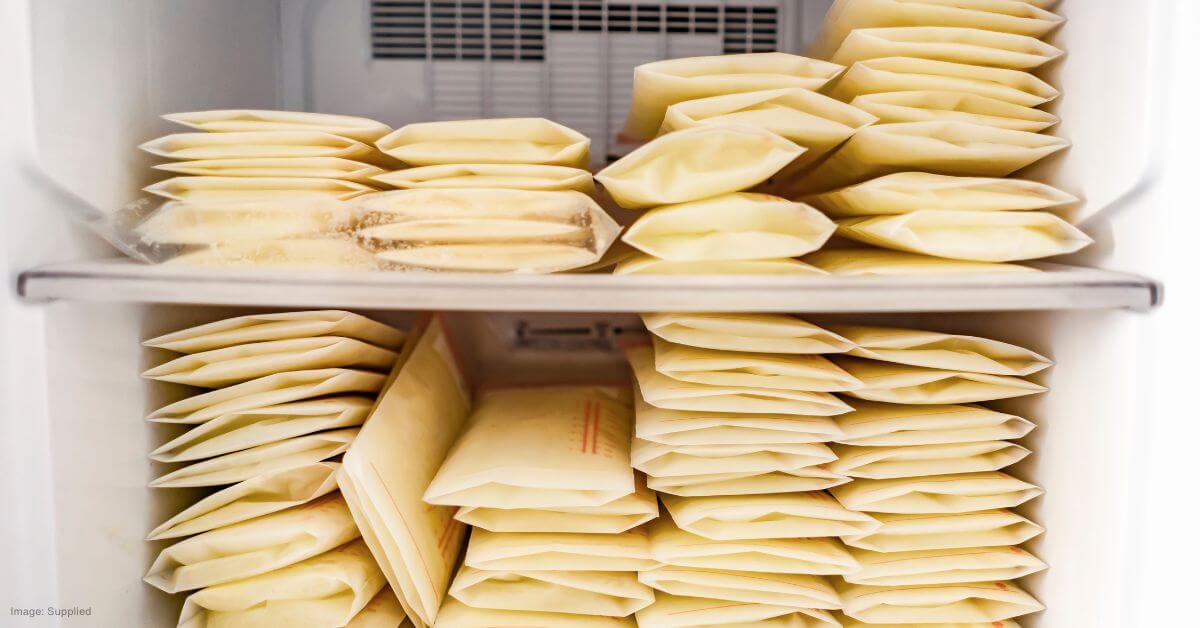
Mums booking a meeting room and putting a fake meeting in the calendar so nobody asks questions, then keeping their milk in a cool bag under the desk because they’d rather not use the office fridge.
The wildest part? It never even occurred to most of us to question it. Pumping in a toilet just felt like… what you do.
But it doesn’t have to be. Across much of the world, breastfeeding and expressing at work is a legal right, with paid time to do it and proper facilities to do it in. In the UK, it isn’t.
A new campaign, Don’t Make Me Choose, is calling on the government to change that.
What the law says right now
In the UK, there is no statutory right to paid breastfeeding or expressing breaks.
There’s no right to a paid reduction in working hours to breastfeed, and no specific right to a suitable space to express milk. That’s true across England, Scotland, Wales and Northern Ireland.
What does exist is thinner than most people assume:
- Health and safety guidance says breastfeeding mothers are entitled to more frequent rest breaks, but the timing and frequency are left for you and your employer to agree.
- Employers must provide somewhere for breastfeeding workers to rest. That’s a place to rest or lie down, not a dedicated space to express milk.
- Risk assessments should consider breastfeeding employees, and your employer may need to adjust your hours or conditions if your work poses a risk.
In practice, that means every mother returning to work has to negotiate on her own for time, privacy and somewhere to store her milk. Whether she gets them depends on her manager, her workplace and how confident she feels asking.
Tip: if you’re returning to work while breastfeeding, tell your employer in writing. That’s what triggers the health and safety protections you do have.
The mum who said enough
Don’t Make Me Choose was started by Rachael Bews, founder of the marketing agency Nu Coton.
The campaign grew out of her own experience: she was excluded from a professional development programme because she needed to attend with her breastfed baby.
The programme offered lactation facilities to employees, but only for expressing. Rachael wasn’t allowed to bring her baby so that she could take part herself.
“No woman should have to choose between breastfeeding her baby and earning a living. Yet that is the choice our current system creates. I began this campaign after being prevented from taking part in a professional opportunity because I needed to bring my breastfed baby. Since speaking publicly, I have heard from women who have expressed milk in toilets, weaned earlier than they wanted to, lost income, turned down opportunities or left work altogether.”
— Rachael Bews, founder of Don’t Make Me Choose
Her experience points to a wider problem. When every arrangement has to be negotiated one-to-one, the women with the least power lose out most. Those in lower-paid, insecure or inflexible jobs are the least able to ask for time, privacy and a fridge. As the campaign puts it, a right that depends entirely on an employer’s goodwill isn’t an equal right.
What the campaign is asking for
Don’t Make Me Choose has a petition on the UK Parliament website and an open letter to Kate Dearden MP, Minister of State for the Future of Work.
The open letter is copied to Bridget Phillipson MP, Minister for Women and Equalities, and Sarah Owen MP, Chair of the Women and Equalities Committee.
It asks the government to introduce:
- Paid time to breastfeed or express. A statutory right to one or more paid daily breaks, or a paid reduction in working hours.
- Recognition that this is working time. Not taken out of your lunch break, and not unpaid.
- A proper space to do it. Private, hygienic, at or near the workplace, and not a toilet.
- Somewhere safe to store milk. Appropriate facilities for expressed milk.
- A clear process so workers know how to use these rights.
- Protection from dismissal, discrimination or any other detriment for asking for or using them.
The letter also asks ministers to:
- include breastfeeding and expressing rights in the government’s parental leave and pay review
- meet a delegation from the campaign and its supporters
- consult on new statutory rights
- bring forward legislation
- set out the government’s position and timetable in writing
The campaign’s supporters already include midwives, lactation consultants, doulas, an obstetrics and gynaecology doctor, HR professionals, employers, academics and a member of the Scottish Parliament.
This isn’t a radical idea
There’s already an international standard for this. Article 10 of the International Labour Organization’s Maternity Protection Convention, 2000 (No. 183) says a woman should have the right to one or more daily breaks, or a daily reduction in working hours, to breastfeed her child. It says this time should count as working time and be paid.
The UK has never ratified the convention. The campaign is asking the government to bring UK law into line with it anyway, as a clear and practical benchmark.
Much of the world already has. A global study published in the Bulletin of the World Health Organization found that 130 countries guaranteed paid breastfeeding breaks. The UK was among the 45 countries with no policy at all.
| Country | What breastfeeding mothers get |
|---|---|
| Ireland | One hour a day without loss of pay, until the baby is two |
| Romania | Two paid hours a day, until the baby is one |
| Germany | Breastfeeding breaks on top of normal breaks, until the baby is one |
| Spain | Breastfeeding hours that can be taken together as up to 28 days of paid leave |
| Brazil | Up to an hour a day of paid breaks, until the baby is six months old |
| Chile | Paid breaks until the child is two |
| The Philippines | Paid breaks counted as working time, plus a lactation station with a fridge, which cannot be in a toilet |
| The UK | No legal right |
Samantha Williams, a director at University College Cork and a signatory to the open letter, points out the contradiction. In Ireland, employers must give an hour a day for breastfeeding or pumping, in line with health advice to breastfeed until two. The NHS gives similar advice about breastfeeding, she notes, yet the UK offers no protection in practice to help mothers follow it.
Why it matters
For mothers’ choices. Too many women stop breastfeeding before they’re ready, not because they want to but because work leaves no room for it. The decision to wean should be yours, not your workplace’s.
For health. The same WHO Bulletin study found that, in countries guaranteeing paid breastfeeding breaks for at least six months, exclusive breastfeeding rates were 8.86 percentage points higher.
For equality at work. When workplaces aren’t designed around women’s bodies, women pay the price in lost income, missed opportunities and careers cut short. Speak Out Revolution’s #DesignHerIn campaign found that a lack of safe spaces to express milk on returning to work is among the top ten barriers to women’s participation in the STEM workforce.
For employers too. A clear legal right gives businesses certainty about what’s expected, rather than leaving every manager to work it out case by case.
And when something becomes a legal right, workplaces respond. Dedicated rooms. Dedicated fridges. And recognition that women are working while breastfeeding, and that it matters.
What has the government said?
So far, not enough. A UK Government spokesperson said it expects employers to be compassionate about giving mums time to breastfeed when they return to work, but that it has no plans to introduce paid breastfeeding time.
Compassion is welcome. But compassion isn’t a right, and it isn’t evenly shared out. That’s exactly why the campaign is asking for the law to change.
What you can do
Birthbabe fully supports Don’t Make Me Choose. Here’s how you can help:
- Sign the petition on the UK Parliament website. At 10,000 signatures the government has to respond, and at 100,000 it will be considered for a debate in Parliament.
- Ask your MP to back the campaign. The campaign website has a template to help.
- Tell your story. If you’ve expressed in a toilet, weaned before you were ready or turned down work because of this, the campaign wants to hear from you.
- Sign the open letter, as an individual or on behalf of your organisation.
- If you’re an employer, take the campaign’s pledge to become a breastfeeding-friendly workplace. You don’t have to wait for the law.
- Share this article with someone who’s been there.
No one should have to choose between feeding their baby and earning a living.
Sources
Don’t Make Me Choose open letter
Working Families, “Returning to work while breastfeeding”
Find out more at dontmakemechoose.co.uk and follow the campaign on Instagram at @_dontmakemechoose.
Image: Supplied
Birthbabe is supported by the beautiful babes who enjoy our content. We only recommend products we genuinely rate. We may receive an affiliate commission.
Birthbabe does not provide medical advice, diagnosis, or treatment. The resources on our website are provided for informational purposes only. You should always consult with a healthcare professional regarding any medical diagnoses or treatment options.