Content note: This article discusses the deaths of children, maternal mental illness, and suicide. If you are struggling, resources are listed at the end of this piece.
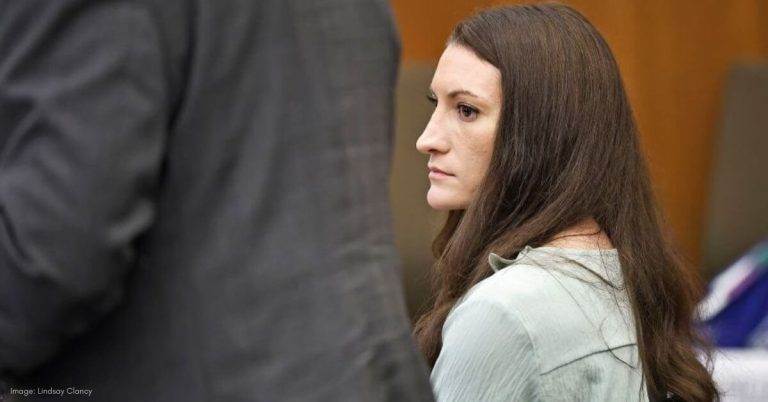
Lindsay Clancy, 36, a former labor and delivery nurse, is on trial for the deaths of her three children – Callan, Dawson and Cora, who ranged in age from 8 months to 5 years – in January 2023. She has pleaded not guilty.
Prosecutors allege the killings were planned. If convicted, Clancy faces life in prison without parole.’
The defense’s argument
Clancy’s defense team argues she should not be held legally responsible for her actions due to her mental state at the time. Her lawyers say she was suffering from bipolar disorder and postpartum psychosis.
Dr. Paul Zeizel, a clinical and forensic psychologist who began treating Clancy in hospital after the incident and has since spent more than 35 hours with her across dozens of visits, testified for the defense this week.
He told the court she was unable to understand the wrongfulness of her actions and had “a mental disease or a defect.”
According to Zeizel’s testimony, Clancy went to a perinatal clinic in December 2022 reporting that she believed her brain was damaged and that she would never get better. He said she was also showing signs of psychosis at the time, including paranoia and a fear that her children would be taken from her.
Zeizel testified that a person can be in a psychotic state while still carrying out everyday tasks like driving or searching the internet.
This was crucial because it addressed the prosecutors’ point that Clancy completed ordinary activities on the day of the killings, including taking her child to the doctor, building a showman with her kids and googling infant medication.
“She was unable to conform her behaviour to the rule of law. She had no appreciation for the wrongfulness of her act,” Zeizel testified, adding that she had “a mental disease or a defect.”
After the incident, Clancy attempted to take her own life. She remains paralysed from the waist down as a result.
The prosecution’s challenge
Prosecutors have questioned Zeizel’s objectivity, noting he has continued treating Clancy as a patient while also appearing publicly alongside her defense attorney.
Zeizel acknowledged that Clancy’s medical records do not document her reporting auditory hallucinations telling her to kill herself, only that she told caregivers she wanted to die.
Prosecutors have also questioned the severity of her post-incident suicide attempt, and have highlighted hospital reports that do not mention Clancy referencing her children’s birthdays or the anniversary of their deaths.
On re-examination, Zeizel testified that Lindsay talks about her children often and thinks of them daily. Lindsay’s defence attorney, Kevin Reddington asked Zeizel if he saw anything in the record from the hospital about Lindsay “laughing, and partying and having a good time” while in the hospital.
“Lindsay Clancy has bad days and worse days,” Zeizel said.
Zeizel, who has spent over 35 hours with Lindsay in multiple visits, said Lindsay often talks about her children, aiming to dispel prosecutors’ contention that she never mentions them.
“She really loves them and misses them and thinks of them every single day, almost every moment of the day,” Zeizel said.
What is postpartum psychosis?
Postpartum psychosis is an uncommon but serious psychiatric condition linked to the hormonal shifts, sleep deprivation and physiological stress that follow childbirth.
It is estimated to affect 1 to 2 out of every 1,000 women after giving birth – making it significantly less common, but considerably more severe, than postpartum depression.
It is classified as a psychiatric emergency. Onset is typically sudden, often within days to weeks of giving birth, and can include symptoms such as confusion, paranoia, delusions, hallucinations, and rapid mood changes. Immediate psychiatric treatment is considered essential.
Where the case stands
The trial is ongoing. Depending on the outcome, Clancy could be sentenced to life in prison without parole, or – if the court finds she lacked criminal responsibility due to mental illness – committed to a state mental health facility rather than convicted.
If you are based in the USA and need mental health support right now, call or text 988, or visit 988lifeline.org.
If you are in the UK or Ireland, you can speak to PANDAS foundation in confidence.
If you are elsewhere, visit befrienders.org to find a helpline near you.
Feature image: Lindsay Clancy
Birthbabe is supported by the beautiful babes who enjoy our content. We only recommend products we genuinely rate. We may receive an affiliate commission.
Birthbabe does not provide medical advice, diagnosis, or treatment. The resources on our website are provided for informational purposes only. You should always consult with a healthcare professional regarding any medical diagnoses or treatment options.